
CIP Cleaning
Closed vessels and transfer circuits need cleaning mapped to the actual route, soil, sequence and return condition.
Application-specific control of unwanted foam in the reviewed process
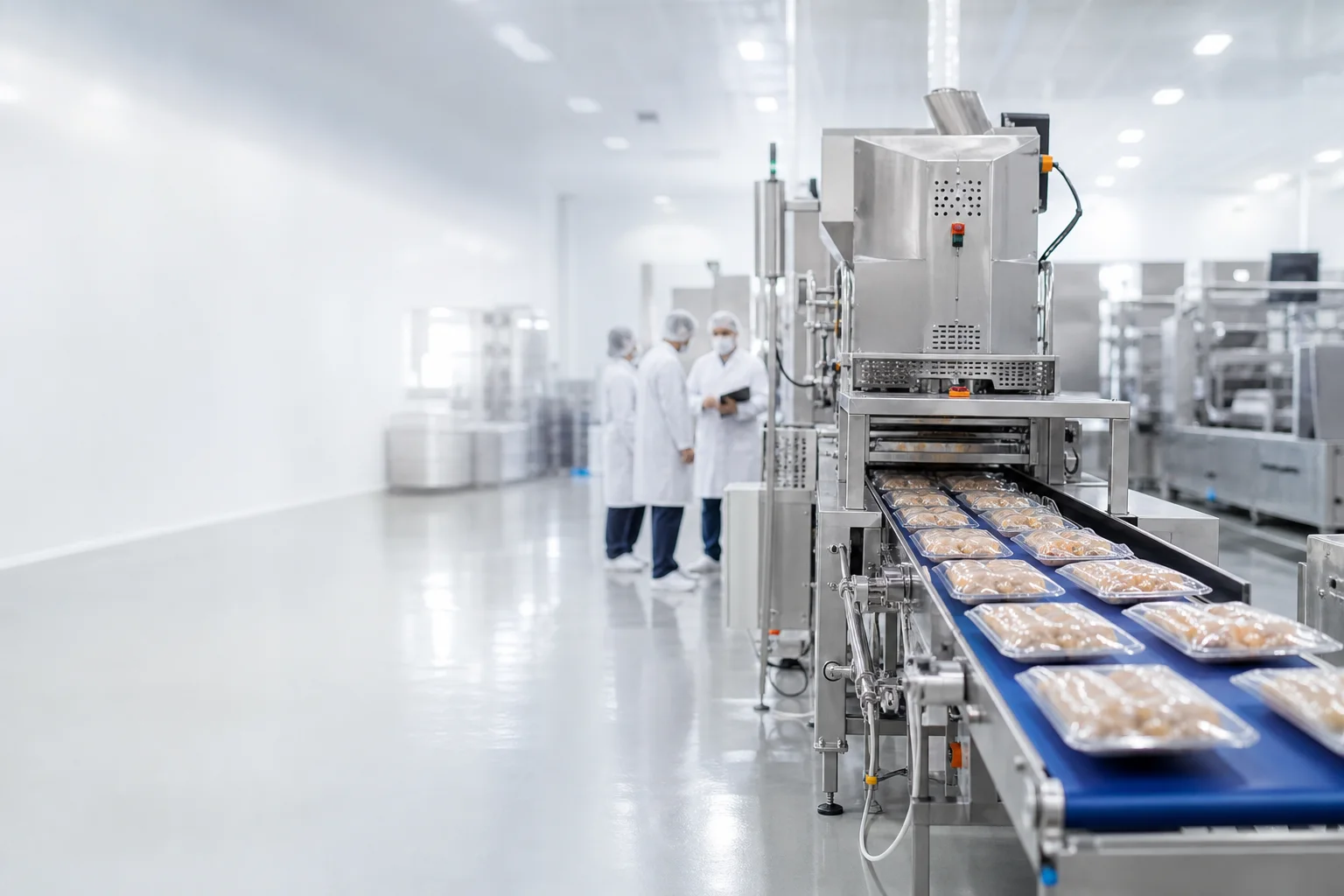
Inspect a representative food-manufacturing route where process equipment, thermal zones, fryer cleaning, CIP, open-plant cleaning and sanitation require distinct decisions.

Select any numbered process point to inspect its operating challenge and treatment context.
The category brief and relevant products stay together. Select a product to open its compact summary and technical tabs.
Process Foam Control
Application-specific control of unwanted foam in the reviewed process
Used forCompatible open-plant surfaces/equipment
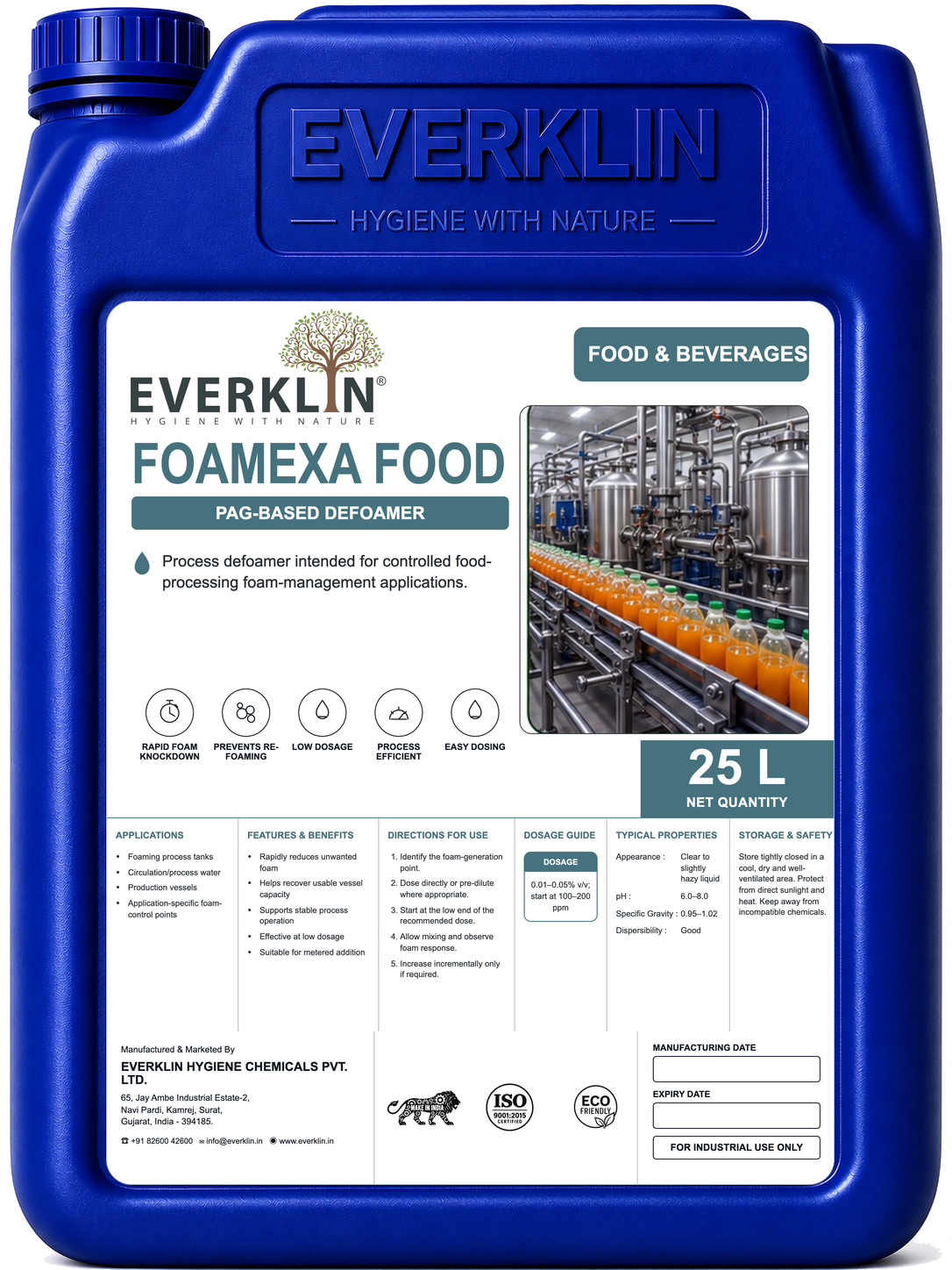
PAG-Based Defoamer - Industrial Grade is positioned within Everklin's Brewery / Beverage / Food / Dairy / Snacks portfolio for open-plant / foam cleaning. Selection should be based on the actual soil or process condition, surface/equipment compatibility, application method and the approved site procedure rather than product name alone.
Use this route when the operating requirement matches open-plant / foam cleaning and the observed condition is consistent with external food soil or process foam depending product role.
PAG-Based Defoamer INDUSTRIAL GRADE
Process Foam Control
Use this route when the operating requirement matches open-plant / foam cleaning and the observed condition is consistent with external food soil or process foam depending product role.
Apply through approved foam/process route; control dwell and rinse where cleaning product
Persistent foam that disrupts capacity, transfer, separation or cleaning
Compatible open-plant surfaces/equipment
Verify substrate/material compatibility before broad use. Do not mix with other chemicals unless an approved procedure explicitly permits it. Product-specific pH, density, actives, exact dilution, contact time, temperature and efficacy claims should only be published from current approved Everklin technical data.
25 L
Verify by visual/process inspection and the relevant operating endpoint. For hygiene applications, use the approved site verification method; for process cleaning, review rinse/return condition and process-specific indicators.
Final values remain subject to the current Everklin TDS and site validation.
Concentration is process-specific. Establish from product role, soil, equipment, temperature, time and validation. Use current Everklin TDS/site SOP before production use.
Confirm the task, soil/process condition and target surface/equipment.
Review compatibility and the approved site/manufacturing procedure.
Prepare or dose the product only at the verified product-specific concentration.
Apply through approved foam/process route; control dwell and rinse where cleaning product
Control relevant dwell/contact, mechanical action, flow or wash-stage conditions.
Rinse, recover, flush or finish as required by the approved procedure.
Verify by visual/process inspection and the relevant operating endpoint. For hygiene applications, use the approved site verification method; for process cleaning, review rinse/return condition and process-specific indicators.
25 L
Store in a cool, dry place. Keep container tightly closed. Protect from direct sunlight and moisture. Shelf life: 24 months from the date of manufacture. ISO 9001:2015 CERTIFIED
External food soil or process foam depending product role
Compatible open-plant surfaces/equipment
Apply through approved foam/process route; control dwell and rinse where cleaning product
Concentration is process-specific. Establish from product role, soil, equipment, temperature, time and validation. Use current Everklin TDS/site SOP before production use.
Start with the active process category, operating objective, soil or residue, materials and application method, then confirm the choice against current product documents.
Product-specific values are supplied through the current approved TDS and Everklin technical review.
Review the current PIS, TDS and SDS together with the approved site or manufacturing procedure.
Closed-process cleaning programmes for tanks, lines and connected process equipment.
Open-plant cleaning programmes for external equipment, floors and exposed production areas.
Alkaline-cleaning options for application contexts where organic soil is under review.
Acid-cleaning options for application contexts where mineral soil is under review.
Foam-applied cleaning programmes for exposed equipment and surfaces.
Specialist cleaning for continuous fryers and connected cooking equipment.
Sanitisation programmes for cleaned processing and hygiene-critical surfaces.
Foam-control support for relevant process or cleaning conditions.
Map cleaning to the actual vessels, transfer route and thermal process where applicable.
Review movement, external equipment and floors as distinct operating zones.
Connect supporting hygiene programmes to the relevant water and post-clean points.
Select an Everklin product to request its current technical documentation.
Share the process area, cleaning challenge and current operating context with Everklin.