Solar Industry
Chemistry for every critical solar process.
Application-led chemistry for solar cell manufacturing, module assembly and installed-panel cleaning.
CHOOSE BY APPLICATION
Find the programme for your operation.
Every category is visible here. Explore its applications, product portfolio and technical information.
 01
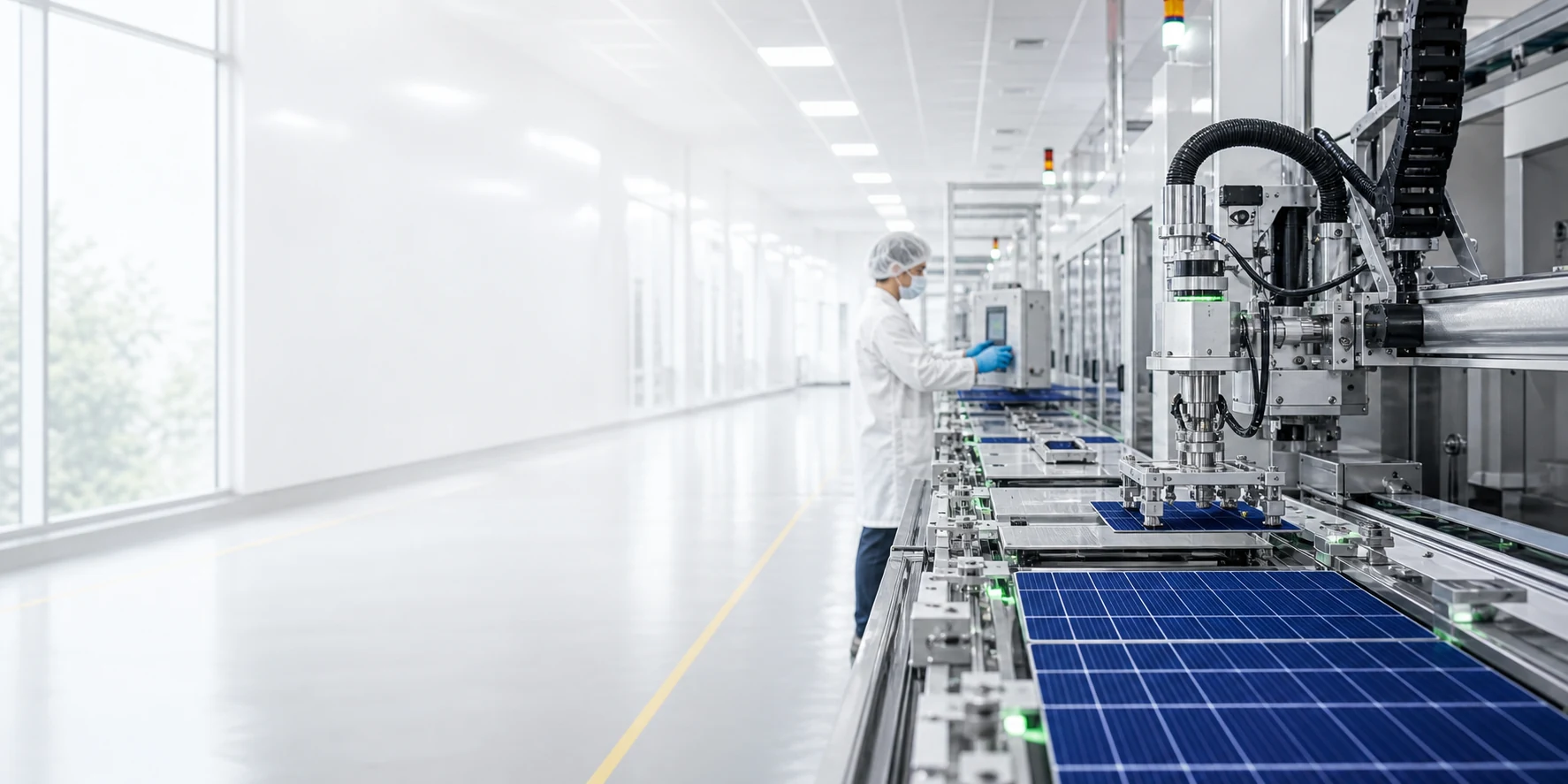
Solar Cell Manufacturing
For precision chemistry across solar cell manufacturing.
- Wafer and cell cleaning
- Alkaline and acid process routes
- Surface-preparation context
 02
Solar Module Manufacturing
For critical solar module assembly stages.
- Glass and frame preparation
- Assembly residue removal
- Lamination and sealant context
 03
Solar Panel Cleaning
For controlled cleaning of installed photovoltaic surfaces.
- Panel-surface cleaning
- Rinse and water context
- Installed-array maintenance
FIND YOUR EVERKLIN SOLUTION
Move from application to a verified product route.
Browse the current portfolio, narrow by application, or search by an existing product name or code. Product-specific use parameters remain connected to the current TDS, SDS and technical review.
Share the actual task, soil or contamination, surface or equipment, method and operating constraints. Everklin can review the relevant product route without publishing unsupported use values.
APPLICATION & PRODUCT SELECTION
Separate panel maintenance from solar manufacturing
Installed photovoltaic panels and factory production stages need different chemistry and compatibility checks.
Solar panel cleaning chemicals
Review panel-surface condition, coating compatibility, water and the equipment supplier's cleaning requirements before selecting a maintenance product.
Solar manufacturing cleaning chemicals
Review the actual cell-manufacturing or module-assembly stage, material and residue. Manufacturing chemistry is not interchangeable with an installed-panel cleaner.
Before choosing a product
Bring the process stage and material specifications to a technical review. No universal coating compatibility or energy-yield improvement is implied.
Find technical and safety documentsAPPLICATION EXPERTISE
Start with the operating challenge.
Application example: a module line can review glass preparation, encapsulant, frame, adhesive and electrical cleaning as distinct application families.
- Residue and contamination at different manufacturing stages
- Compatibility across glass, EVA, frame, silicone and electrical areas
- Process cleanliness without unsupported universal-use claims
- Controlled application and documented review
What informs programme selection?
- Process / soil
- Identify flux, adhesive, silicone, handling residue or preparation requirement.
- Material
- Confirm glass, encapsulant, frame, cell, ribbon or electrical-component context.
- Water / temperature
- Review whether the operation is aqueous, solvent-led and temperature-sensitive.
- Required result
- Define preparation, residue removal or maintenance objective.
- Control limits
- Confirm compatibility, method and process boundaries before approval.
HOW WE WORK
A clear route from task to programme.
- 01
Assess
Understand the application, operating conditions and current challenge.
- 02
Select
Match the programme to the task, materials and equipment.
- 03
Validate
Review current technical documents and the site-specific method.
- 04
Support
Connect implementation, training and ongoing technical review.
TECHNICAL DOCUMENTATION
Keep selection connected to the facts.
Current catalogues, product information and controlled technical documents.
START A TECHNICAL REVIEW
Build the right programme for your operation.
Tell us about your application, operating priorities and current challenge.