
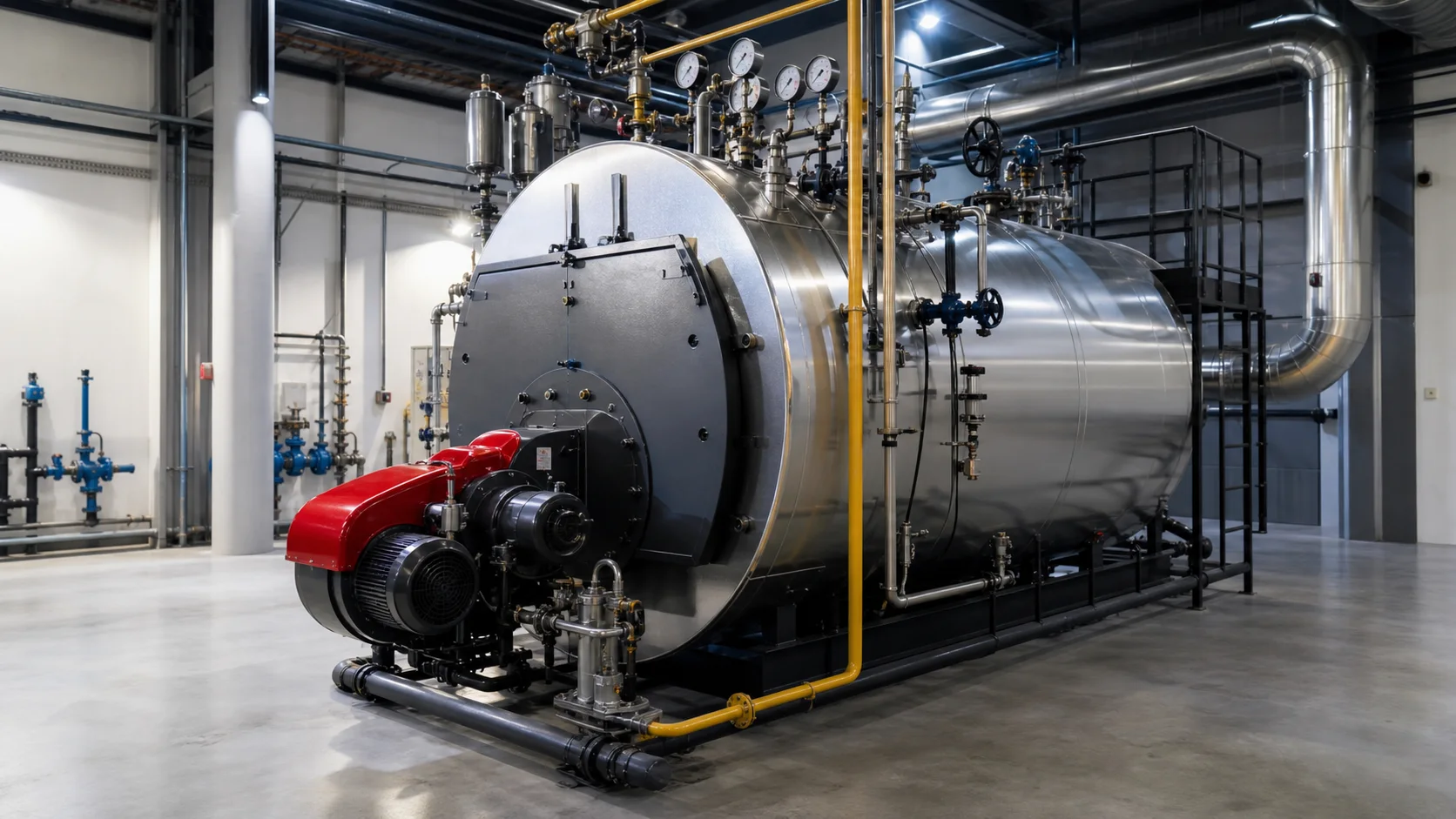
Make-up and pretreatment
Review source water, pretreatment and the condition entering the feedwater route.
Follow the boiler-water path from make-up through steam and condensate return, and connect each operating zone to the relevant treatment programme.

A boiler programme starts before water reaches the boiler. Make-up, pretreatment, feedwater, deaeration, internal water, steam, condensate and blowdown are connected operating zones.
This workspace is a technical guide for reviewing those zones. It does not set a dose, replace site procedures or automatically select a product.
Review source water, pretreatment and the condition entering the feedwater route.
Connect dissolved-gas control to the installed deaeration and feedwater arrangement.
Review alkalinity, phosphate, suspended solids and the active internal-water programme together.
Keep steam-side observations and any carryover concern attached to the boiler condition.
Bring return-line condition and the feedwater loop into the same technical review.
Review suspended-solids control and water balance with the site operating procedure.
Any product selection, dosing, cleaning or corrective work must follow the current system assessment, approved technical information and site procedure.
Visible markers map each programme to its relevant boiler system zone.
The workspace keeps each treatment area connected to the wider steam and condensate circuit rather than presenting it as an isolated chemical choice.
The quality of water reaching the boiler is shaped by the source, pretreatment, storage and deaeration route. A feedwater review connects these parts before an operating programme is discussed.
The pretreatment route is reviewed in relation to the actual source water and the boiler system it supports. A single treatment family should not be used as a substitute for understanding the full water path.
Scale-risk review begins with the water route, not a generic product match.
Oxygen-scavenger review is connected to the installed deaerator, feedwater temperature, operating pattern, condensate return and current chemistry programme.
Alkalinity, phosphate, suspended solids and boiler-water operating condition are assessed as connected decisions. The appropriate approach depends on the installed boiler and current technical evidence.
Alkalinity builders and phosphate treatment are not stand-alone adjustments. Their review considers the boiler configuration, feedwater condition, internal-water records and the selected treatment programme.
Sludge-conditioning discussion is linked to deposit behaviour, internal-water condition, blowdown arrangement and the site operating procedure.
A blowdown decision is part of the boiler-water balance and operating discipline.
Steam-side observations and condensate return affect the larger feedwater loop. A boiler programme remains strongest when this return path stays part of the review.
Condensate-treatment review considers the return percentage, line condition, steam-system configuration and current operating information before a programme is selected.
Foam or carryover observations are reviewed against actual internal-water condition, steam separation, operating practice and the complete chemistry programme.
An observed steam-side symptom should lead to a system review, not an automatic treatment change.
A technical review should connect records, sampling, equipment condition, operating procedure and planned maintenance. Chemistry is only one part of that controlled approach.
A useful boiler review brings together water data, boiler condition, operating observations, deposits where relevant and current site documentation.
Where deposit removal is considered, it should be planned around isolation, deposit evidence, metallurgy, approved cleaning procedure and post-cleaning follow-up.
Offline maintenance work requires system-specific review before it begins.
Use the observed condition to open the relevant technical area. These routes are educational and do not prescribe a treatment programme.
The technical review keeps source water, feedwater, internal boiler water, steam, condensate and operating practice in the same conversation.
| Potential condition | Primary technical area | Assessment focus |
|---|---|---|
| Feedwater concern | Feedwater Protection | Confirm source, pretreatment, storage and deaeration context. |
| Oxygen-related concern | Feedwater Protection | Confirm deaeration and feedwater operating information. |
| Scale or deposit concern | Feedwater + Internal Water | Review water path, deposits, internal condition and procedure. |
| Suspended solids concern | Internal Water Control | Review internal-water condition and blowdown arrangement. |
| Return-side concern | Steam and Condensate | Confirm condensate route and its connection to feedwater. |
This is an educational assessment framework, not an automatic chemical recommendation engine.
The parameters reviewed depend on boiler design, current procedure, water condition and verified technical requirements.
Each item below is part of the approved public Boiler Chemicals architecture. Technical information is requested against the actual boiler system and programme area.
Feedwater and deaeration context.
Request technical information →Incoming-water, pretreatment and boiler-water scale-risk context.
Request technical information →Selected internal-water chemistry context.
Request technical information →Internal boiler-water programme context.
Request technical information →Suspended-solids and blowdown context.
Request technical information →Steam and condensate-return context.
Request technical information →Documentation is requested in the context of the selected programme area and the boiler system it supports.
Feedwater condition is connected to the water entering the boiler and affects the broader internal-water programme.
They are linked operating considerations. Internal-water condition, suspended material and the blowdown arrangement should be reviewed together.
Dissolved-gas control depends on the installed feedwater and deaeration route, not on a stand-alone treatment label.
The return path contributes to the full feedwater loop and can affect the system context being assessed.
No. Corrective cleaning requires system-specific assessment, isolation planning and approved technical procedure.
Useful information includes the water route, equipment configuration, available operating records, current programme and relevant system history.
Share the boiler configuration, water route, current operating concern and available records for an application-led technical review.