
Hot water from process
Warm return water carries process heat back to the tower.
Advanced cooling-water treatment programmes designed around water chemistry, system conditions, metallurgy and operating objectives.

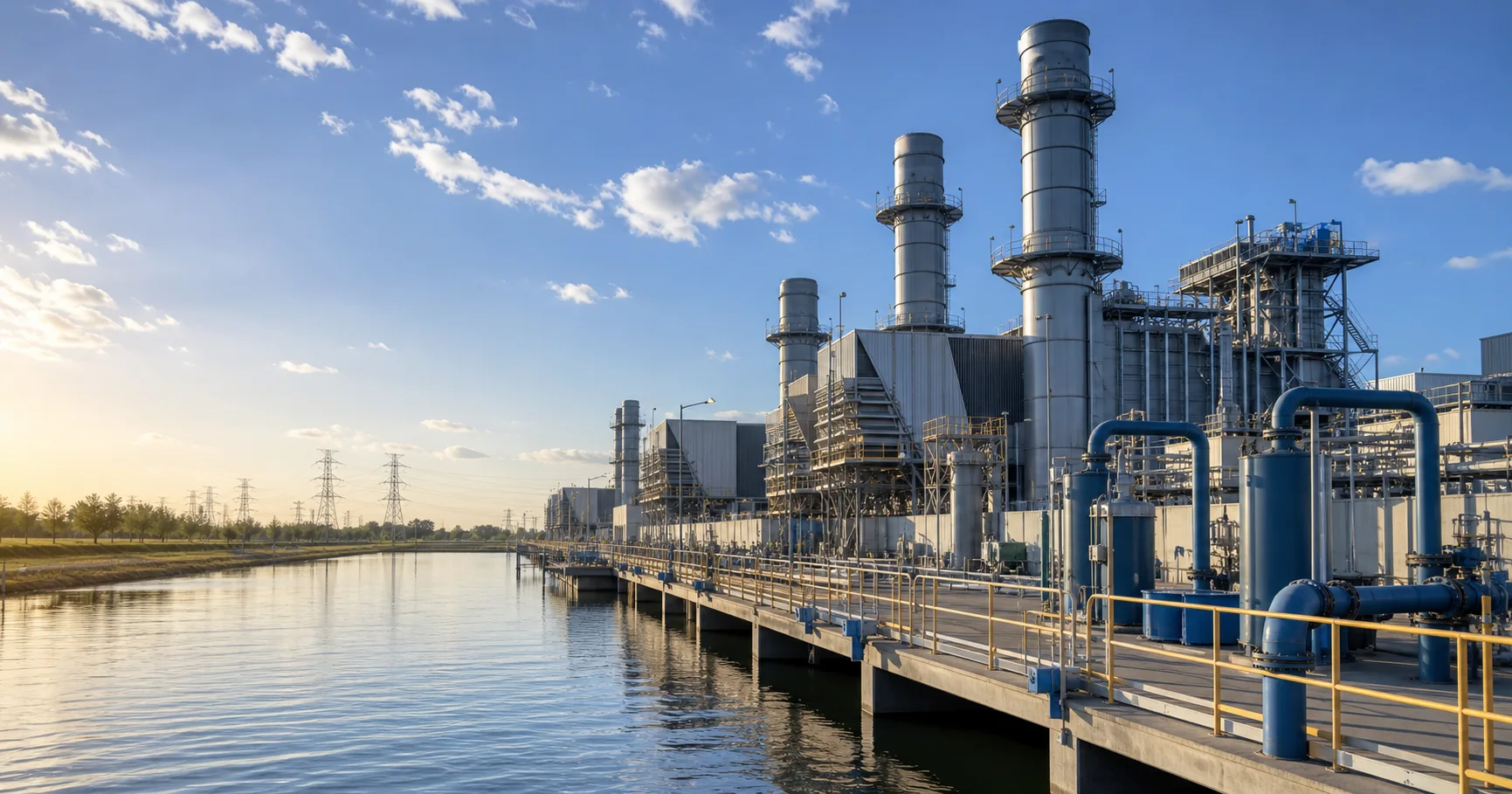
A cooling tower is part of a heat-rejection system in which circulating water absorbs heat from process equipment and releases part of that heat primarily through evaporative cooling.
The actual arrangement varies by system. Treatment therefore starts with the water, equipment and operating context rather than a universal programme.
Warm return water carries process heat back to the tower.
Water is distributed across the heat-transfer area.
Water is spread to support heat and mass transfer.
Air movement supports evaporative heat rejection.
A portion of water evaporates and removes heat.
Cooled circulating water collects for return to the process.
The pump returns cooled water to heat exchangers or the process loop.
Process heat is transferred into circulating cooling water.
A fraction of circulating water evaporates, helping remove heat.
Air movement supports heat and mass transfer through the tower.
Fresh water replaces losses from evaporation, blowdown and other system losses.
A portion of concentrated circulating water is removed to help manage dissolved and suspended constituents.
Cooled water returns to the process or heat exchangers.
Cooling systems differ in tower design, water source, metallurgy, heat load, control arrangement and discharge constraints. The sequence above is an educational system view, not a universal operating configuration.
Select a marked cooling-system point to open the related treatment area in the technical workspace below.
This workspace is system-assessment-first. It explains treatment areas without automatically selecting a product or prescribing a dose.
Cooling-water evaporation can increase the concentration of dissolved constituents in recirculating water. Under suitable water and operating conditions, sparingly soluble minerals and suspended material may form deposits on heat-transfer or system surfaces.
The technical objective is to understand the deposit risk in the actual circuit and select a controlled treatment approach after assessment.
Evaporation removes water while many dissolved constituents remain in the recirculating circuit. The exact treatment mechanism depends on the chemistry and water condition; a site-specific review is required before selecting an Everklin programme.
Mineral scale, corrosion products, suspended material, organics and biological material can coexist. Deposit identification matters before the technical route is chosen.
One deposit does not always have one cause.
Deposit-risk assessment can include make-up water, the tower, basin, circulation path, heat exchangers, side-stream equipment and blowdown arrangement. The priority points depend on the installed system.
Cycles of concentration describe the increasing concentration of dissolved constituents in recirculating water relative to make-up water. There is no universal target because permissible operation depends on water chemistry, metallurgy, heat load, discharge constraints and treatment design.
A scale-control programme should be reviewed against the full water and system condition. A single lab value or generic application label is not enough for responsible selection.
Monitoring is used to understand whether the operating condition remains aligned with the intended programme and equipment condition.
The programme should be reviewed when make-up water, heat load, process conditions, discharge requirements, metallurgy or deposition history changes.
Corrosion control in cooling-water systems is intended to help reduce deterioration of susceptible metallic equipment under defined water and operating conditions. The correct treatment approach depends on actual system metallurgy, water chemistry and operation.
Corrosion risk is influenced by more than one parameter. The point is not to apply universal thresholds, but to understand the condition of the installed system.
Cooling-water corrosion programmes are reviewed against water chemistry, system metallurgy, operating conditions and asset evidence. Product-specific protection mechanisms or compatibility must be confirmed from verified Everklin documentation.
Treatment selection needs to consider the materials actually installed in the recirculating circuit. Universal compatibility should never be assumed without verified technical documentation.
Water chemistry cannot be assessed without metallurgy.
Corrosion review can include the tower, basin, pump, piping, heat exchangers, valves, headers and process-connected assets. A selected focus depends on where the condition is observed.
An evidence-led review considers the material of construction, water data, operating history, observed corrosion products and available technical documents.
Corrosion control is supported by reviewing appropriate water indicators, equipment condition and trends over time.
A treatment review should be revisited after changes to make-up water, system configuration, metallurgy, flow conditions, heat load, process contamination or operation.
Circulating water, nutrients, surfaces and operating conditions can create an environment in which microorganisms may develop. A microbiological-control programme is reviewed around the current system condition and approved operating procedure.
Microbial fouling can interact with suspended material and mineral deposition. A visible symptom should be assessed for contributing conditions rather than treated as a single-cause problem.
The treatment approach is shaped by current microbial condition, system history, application context, water condition, monitoring approach and approved Everklin documentation.
Oxidizing biocides are a general cooling-water microbiological-control approach. Product selection, compatibility, dosage, contact time and dosing frequency must be determined from verified documentation and site-specific treatment design.
No generic dose or contact time is published here.
Non-oxidizing biocides are another general microbiological-control approach. The appropriate route must be reviewed against the current cooling system and confirmed through approved Everklin technical information.
No generic dose or contact time is published here.
The tower, basin, recirculation path, heat exchangers, side-stream equipment and areas of low flow may all be relevant to a system assessment.
A microbial-control route is not selected from a label alone. It needs current system data, the operational procedure and confirmation of relevant chemical, equipment and discharge considerations.
Monitor relevant microbiological indicators where available together with fouling trend, system history and operating observations.
Biodispersant chemistry may be used as part of a biological-fouling-control programme to help penetrate, loosen or disperse biological deposits so treatment can reach affected surfaces more effectively. It should not be presented as a stand-alone sterilisation route.
Biodispersant alone is not a universal microbiological solution.
Established biological deposits may retain microorganisms, organic material and particulate matter. This can make a complex fouling condition harder to diagnose and manage.
A system can have biological material, suspended solids, corrosion products and mineral deposition at the same time. The root cause should be determined before the treatment strategy is finalised.
One symptom does not always mean one root cause.
The general role of biodispersion is to support a treatment programme by helping manage biological deposits. Exact mechanism and compatibility are product- and system-specific and must be confirmed through verified technical documentation.
Application review considers the tower, basin, heat-transfer route, water condition, existing fouling, microbial-control approach and the approved operating procedure.
Biodispersion is selected only after the potential fouling mechanism, system condition and relevant product compatibility have been reviewed.
Use relevant system, water and asset observations to understand whether the treatment strategy remains aligned with the actual condition.
Use the operating symptom to open the relevant technical area. These pathways are educational and do not automatically recommend an Everklin product.
A responsible cooling-water review brings water quality, circulating-water data, operating conditions, system design, metallurgy and history into the same technical conversation.
Biofilm, suspended solids, corrosion products and mineral deposition can combine into a complex deposit. The treatment strategy follows diagnosis, not an automatic product match.
One symptom does not always mean one root cause.
| Potential condition | Primary technical area | What must be confirmed |
|---|---|---|
| Scale | Scale & Deposit Control | Confirm water chemistry and concentration conditions. |
| General deposition | Deposit Control | Identify deposit composition and source. |
| Corrosion | Corrosion Control | Confirm metallurgy, water chemistry and operating conditions. |
| Biological growth | Microbiological Control | Confirm organism condition and system history. |
| Biofilm | Microbiological + Biodispersion Assessment | Identify severity and contributing deposits. |
| Suspended solids | Fouling / Filtration Assessment | Identify source and loading. |
| Mixed fouling | Integrated Programme Assessment | Identify primary and secondary mechanisms. |
This is an educational diagnostic framework, not an automatic chemical recommendation engine.
Monitoring should support technical action. The parameters reviewed depend on the system, current operating procedure and verified control capability.
Where an existing Everklin dosing or monitoring system is appropriate, its integration is assessed against the actual sensor, controller, dosing and blowdown arrangement.
Effective cooling-water management can involve balancing heat rejection, water chemistry, treatment, cycles of concentration and blowdown. The appropriate operating approach depends on actual water quality, system conditions and discharge requirements.
Products remain separate from the technical workspace. The records below are drawn from the current Everklin product data; selection still requires technical review.
Scale Inhibitor is part of Everklin's Cooling Tower Treatment portfolio for industrial cooling-water treatment programmes. Current product documents, application guidance and technical consultation are available on request.
Application: Evaluate Scale Inhibitor within industrial cooling-water treatment programmes using current product documentation and site-specific guidance.
Corrosion Inhibitor is part of Everklin's Cooling Tower Treatment portfolio for industrial cooling-water treatment programmes. Current product documents, application guidance and technical consultation are available on request.
Application: Evaluate Corrosion Inhibitor within industrial cooling-water treatment programmes using current product documentation and site-specific guidance.
Oxidizing Biocide is part of Everklin's Cooling Tower Treatment portfolio for industrial cooling-water treatment programmes. Current product documents, application guidance and technical consultation are available on request.
Application: Evaluate Oxidizing Biocide within industrial cooling-water treatment programmes using current product documentation and site-specific guidance.
Non Oxidizing Biocide is part of Everklin's Cooling Tower Treatment portfolio for industrial cooling-water treatment programmes. Current product documents, application guidance and technical consultation are available on request.
Application: Evaluate Non Oxidizing Biocide within industrial cooling-water treatment programmes using current product documentation and site-specific guidance.
Multi Functional Chemicals is part of Everklin's Cooling Tower Treatment portfolio for industrial cooling-water treatment programmes. Current product documents, application guidance and technical consultation are available on request.
Application: Evaluate Multi Functional Chemicals within industrial cooling-water treatment programmes using current product documentation and site-specific guidance.
Technical documents and assessment materials are issued through the relevant Everklin review so the system and product context stays connected.
A cooling tower is part of a heat-rejection system. Circulating water carries process heat to the tower, where evaporative cooling releases part of that heat before the cooled water is returned to the process.
Treatment may be required to manage scale, corrosion, microbiological growth, deposition and operating control in the specific circulating-water system. The exact need depends on current water, equipment and operating conditions.
Evaporation can increase the concentration of dissolved constituents in circulating water. Under suitable conditions, some constituents can form deposits on system surfaces.
Corrosion can be influenced by water chemistry, metallurgy, oxygen, temperature, flow conditions, deposits, microbiological activity and operating conditions. A technical assessment considers them together.
Microorganisms can attach to surfaces and develop biological material or biofilm. Biofouling can interact with suspended material and mineral deposition.
A cooling-tower biocide is part of a microbiological-control approach. Product selection and use must follow approved technical documentation and the current system treatment design.
Oxidizing biocides use oxidative chemistry to control microorganisms; non-oxidizing biocides use chemistry-specific mechanisms. The appropriate approach depends on the system and approved treatment programme.
A biodispersant may support a biological-fouling-control programme by helping manage biological deposits so associated treatment can reach affected surfaces more effectively. It is not presented as a stand-alone sterilisation route.
They describe the relative increase of dissolved constituents in recirculating water compared with make-up water as evaporation occurs. The acceptable operating range depends on the specific system.
Blowdown removes a portion of concentrated circulating water to help manage dissolved and suspended constituents. The right approach depends on water chemistry, equipment and operating conditions.
No. Cooling towers differ in water source, metallurgy, heat load, tower design, operating practice, microbiological condition and discharge constraints.
A useful review considers make-up and circulating-water data, operating conditions, system design, metallurgy, treatment history, deposits and microbiological condition where relevant.
Yes. These conditions can interact with each other and with suspended solids, so an observed symptom should be assessed for primary and contributing causes.
Selection should follow a system assessment, current water analysis, operating review, metallurgy and verified Everklin technical information rather than an automatic product match.
Cooling-water chemistry should be selected from actual water quality, circulating-water conditions, system design, metallurgy, microbiological condition and operating objectives. Submit your operating data and water analysis for technical assessment.