
Feed water
Water entering the RO system after applicable pretreatment.
Protect membrane performance by connecting feed-water conditioning, membrane protection and planned cleaning to the actual RO system.
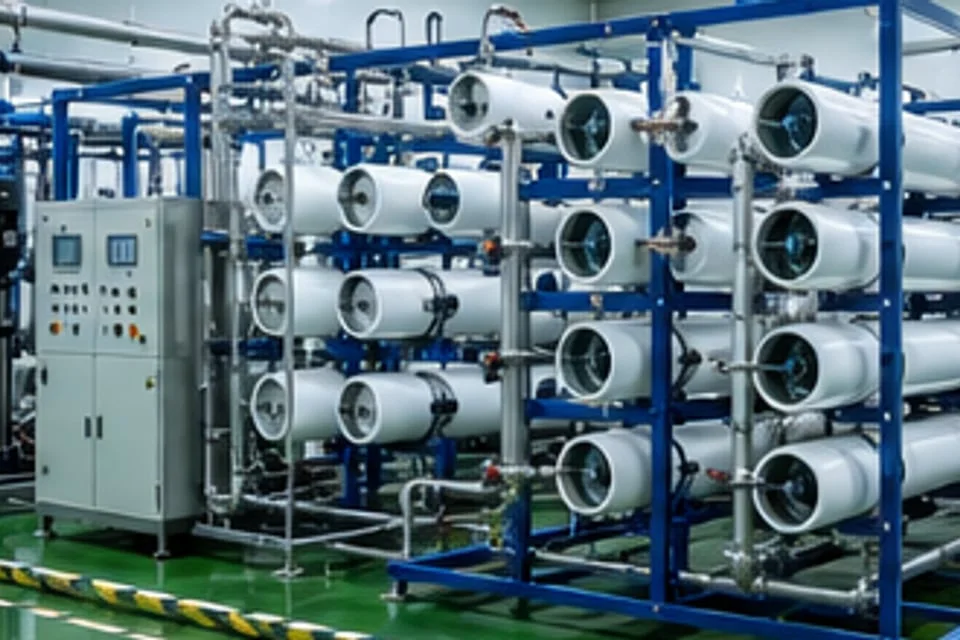
Reverse osmosis is a pressure-driven membrane separation process in which feed water is forced through a semipermeable membrane.
Water passes through the membrane while dissolved constituents are preferentially retained in the concentrate stream.
Water entering the RO system after applicable pretreatment.
Upstream conditioning that helps prepare water for the membrane train.
Hydraulic pressure provides the driving force for membrane separation.
The semipermeable membrane allows water transport while retaining a substantial fraction of dissolved constituents.
The product-water stream passing through the membrane.
The stream containing increased concentrations of rejected constituents.
Actual RO performance depends on feed-water quality, temperature, membrane characteristics, recovery, pressure, membrane configuration and operating conditions.
Operating chemistry and the offline CIP path are intentionally separated in the visual.

The workspace is a technical guide to RO chemistry areas. It does not select or recommend a product automatically.
Antiscalants are treatment chemicals used to help control mineral precipitation, crystal growth and deposition during reverse osmosis operation.
As water passes through an RO system, dissolved constituents become progressively concentrated. Under suitable chemical and operating conditions, sparingly soluble compounds can become supersaturated and precipitate.
Antiscalant chemistry is used to reduce the tendency of these deposits to form and accumulate on membrane surfaces.
Treatment objective: control mineral scaling risk.
As reject concentration rises, mineral species can move toward supersaturation. Depending on chemistry, an antiscalant can influence nucleation, crystal growth and/or dispersion.
Actual scaling potential depends on feed-water chemistry, recovery, temperature, pH and system design.
Antiscalant is normally introduced upstream of the membrane array at an appropriate dosing location. The selected point must match the system arrangement and programme review.
The application review connects feed chemistry, recovery, concentration factor, temperature, pH and membrane configuration. No universal recovery limit or dosing point applies to every RO system.
A programme should be assessed against the complete water and system context, not a single analysis result.
Operating trends help show whether a treatment programme remains aligned with the RO system.
Biocides are chemicals used as part of a microbial-control programme to manage microorganisms and reduce the risk of biological fouling.
Microbial contamination can enter through feed water, pretreatment, storage, piping and associated process systems.
The objective is to manage biological growth and biofouling risk, subject to membrane compatibility and the approved treatment procedure.
The mechanism depends on the actual biocide chemistry. Product-specific mechanism claims must be confirmed by approved technical documentation.
Biofilm can retain microorganisms, organic matter and particulate material, making established biological fouling more difficult to remove.
Actual application depends on chemistry and membrane compatibility.
Biocide use is reviewed around the current microbial condition, membrane compatibility and operating procedure. Generic dosage is not published here.
Selection needs a technical assessment of system condition and approved operating requirements.
Use system trends and available indicators to keep the microbial-control programme visible.
Membrane cleaners are chemicals used during controlled cleaning procedures to remove accumulated deposits and fouling from RO membrane surfaces.
Cleaner selection must be based on foulant identification and membrane compatibility.
Cleaning should be based on normalized operating data and diagnosis rather than an arbitrary calendar interval.
A technical review should distinguish likely foulants before a cleaning route is selected.
RO membrane deposits are not always composed of a single foulant. Mineral scale, organic material, microorganisms, colloidal material and other deposits can accumulate together and interact on the membrane surface.
One chemistry may not address every component of a mixed deposit. The correct cleaning strategy should be determined from foulant diagnosis, membrane compatibility and operating history.
One symptom is not one foulant.
The exact mechanism depends on cleaner chemistry and foulant. No single cleaner should be assumed to remove every foulant.
Actual cleaning chemistry must follow membrane manufacturer compatibility and applicable Everklin technical instructions.
Typically associated with mineral or inorganic deposits.
Typically associated with organic and some biological fouling.
For deposits requiring specialized chemistry.
Concentration, temperature, cleaning time, pressure and flow rate must come from the applicable TDS/SDS and membrane manufacturer guidance.
The cleaning plan should match the identified foulant and the installed system.
Corrosion inhibitors are application-specific chemicals used to help reduce corrosion risk in susceptible metallic equipment under defined water and operating conditions.
Applicability must be established for the actual system.
Corrosion risk comes from the interaction of water chemistry, materials of construction and operating conditions.
The exact mechanism depends on inhibitor chemistry. Product-specific film-forming or adsorption claims require verified product documentation.
Actual applicability depends on material and chemistry.
An application review connects metallurgy, water chemistry and process requirements.
The technical review should keep the materials, water and downstream context together.
Where appropriate, trend operating indicators alongside equipment inspection history.
Start with the condition and its operating evidence. A chemistry area is a place to begin technical assessment, not an automatic product recommendation.
This educational framework organizes the information required before a chemistry area and product route are assessed.
| Potential condition | Primary chemistry area | Technical assessment |
|---|---|---|
| Scaling | Antiscalants | Confirm water chemistry and scaling potential. |
| Biofouling | Biocides | Confirm microbiological condition and membrane compatibility. |
| Organic fouling | Membrane cleaners | Identify the organic foulant. |
| Mineral fouling | Membrane cleaners | Identify the scale or deposit. |
| Mixed fouling | Cleaning / multi-step assessment | Identify primary and secondary foulants. |
| Corrosion | Corrosion inhibitors | Confirm material and water chemistry. |
This is an educational diagnostic framework. It is not an automatic chemical recommendation engine.
Review feed, pretreatment and conditioning around the active membrane system.
Connect technical selection to current membrane and system information.
Treat planned membrane cleaning as an isolated maintenance process with its own review.
Only published records are shown. Product-specific dosage, formulation, compatibility and performance claims are available only through current approved documentation and technical review.
No published Everklin product record is listed here. Request a technical assessment for the current RO system.
Biocide is part of Everklin's RO Treatment portfolio for reverse-osmosis treatment programmes. Current product documents, application guidance and technical consultation are available on request.
Application: Evaluate Biocide within reverse-osmosis treatment programmes using current product documentation and site-specific guidance.
Membrane Cleaner supports ro treatment programs with dependable chemistry, controlled application, documentation support and Everklin technical guidance.
Application: Evaluate Membrane Cleaner within an RO maintenance workflow using current product and system guidance.
No published Everklin product record is listed here. Technical assessment is required before a programme is considered.
These published RO product records remain available as supporting programme information.
Dechlorination Chemicals is part of Everklin's RO Treatment portfolio for reverse-osmosis treatment programmes. Current product documents, application guidance and technical consultation are available on request.
Application: Evaluate Dechlorination Chemicals within reverse-osmosis treatment programmes using current product documentation and site-specific guidance.
RO Performance Chemicals is part of Everklin's RO Treatment portfolio for reverse-osmosis treatment programmes. Current product documents, application guidance and technical consultation are available on request.
Application: Evaluate RO Performance Chemicals within reverse-osmosis treatment programmes using current product documentation and site-specific guidance.
Request the current TDS, SDS or technical-assessment support for the RO chemistry area under review.
Reverse osmosis is a pressure-driven membrane separation process in which water passes through a semipermeable membrane and dissolved constituents are preferentially retained in the concentrate stream.
As water is concentrated in the RO system, sparingly soluble constituents can move toward supersaturation and deposit under suitable chemical and operating conditions.
An antiscalant is used to help control mineral precipitation, crystal growth and deposition. The actual programme requires water and system assessment.
Fouling can involve inorganic scale, organic material, microorganisms, colloids, silica-related deposits or combinations of these.
Biofouling is the accumulation of microorganisms and associated extracellular material on membrane surfaces or within related water-system areas.
Biocides may be part of a microbial-control programme to manage biological growth, subject to membrane compatibility and the approved treatment procedure.
Natural organic matter, process organics and other organic residues can contribute, depending on the feed-water and operating context.
Cleaning should follow normalized operating data and diagnosis rather than an arbitrary calendar interval.
Mixed fouling occurs when more than one foulant type is present, such as scale with organic material or biofilm.
No. Cleaning chemistry and sequence should be selected from the diagnosed foulant, membrane compatibility and operating history.
No. Corrosion-inhibitor applicability depends on water chemistry, material of construction and the actual operating context.
Selection should follow a technical assessment of water quality, system operation, membrane data, fouling or scaling evidence and current approved documentation.
Water analysis, RO operating data, membrane and system information, current chemistry, cleaning history and the identified treatment risk are all relevant.
RO chemistry should be selected from the actual water, membrane, operating conditions and identified treatment risk. Submit your RO operating data and water analysis for technical assessment.